
Updated June 2026
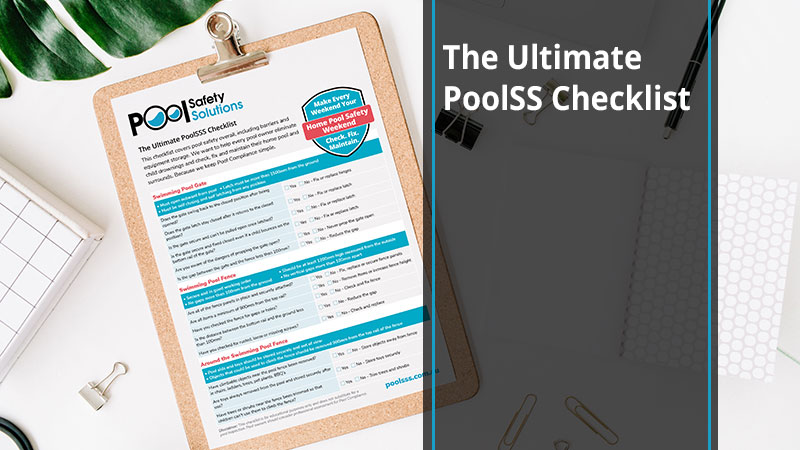
There are 10 different checklists for every swimming pool or spa in New South Wales and Queensland, depending on the property and pool type you own. Sounds confusing right? We’ve got you: DIY Pool Safety with the PoolSS DIY Inspection Checklist.
Easy Click Through Table of Contents
Want To Know If Your Pool Fence Is Compliant?
Your Pool Safety Inspector is trained on the AS 1926.1:2025 Standards and offer the best insights to your pool safety compliance. Book Inspection Now to keep your family and community safe.
Australia certainly loves their pools – with more than
- 250,000 pools in QLD
- 374,000 pools in NSW, and
- 200,700 in VIC
They’re an Australian status symbol, significantly contributing towards boosting the value of our property and lifestyle.
This impressive asset and vacation lifestyle also comes with the high risk of children aged 0-4 drowning.
The Top Reasons For Failing A Pool Inspection
The top reasons for failing a pool safety compliance inspection are pinpointed to
Faulty fences
Lack of fences
Faulty gates
Pool gate left open
What Pool Safety Inspectors Look At
The role of a pool safety inspector is to
- inspect pools, spas and barriers, and
- lodge the inspection and details through their state swimming pool register
This is what Pool Safety Inspectors look at
Faulty gate latches and hinges
The top reason a swimming pool is non-compliant is when a gate hinge or latch is faulty, or does not follow the pool safety rules. Faulty gates and latches allow children to have access and enter the pool area.
The gate must comply with all Australian Standards for pool safety:
- AS 1926-1986, fences and gates for private swimming pools which applies to pools constructed prior to 30 August 2008
- AS 1926.1 – 2007, swimming pool safety, Part 1 safety barriers for swimming pools which applies to pools constructed between 1 September 2008 to 30 April 2013
- AS1926.1 – 2012, swimming pool safety, Part 1 safety barriers for swimming pools constructed after 1 May 2013
The swimming pool gate latches must also stick and catch the first time.
Pool gates open away from the pool and are self-closing and latching from all distances while hinges are 900mm apart or have a safety cap on them
The Gate latch is at least 1500mm from the finished ground level or if positioned on the back, must be at least 150mm down from the top with a 450mm shielding.
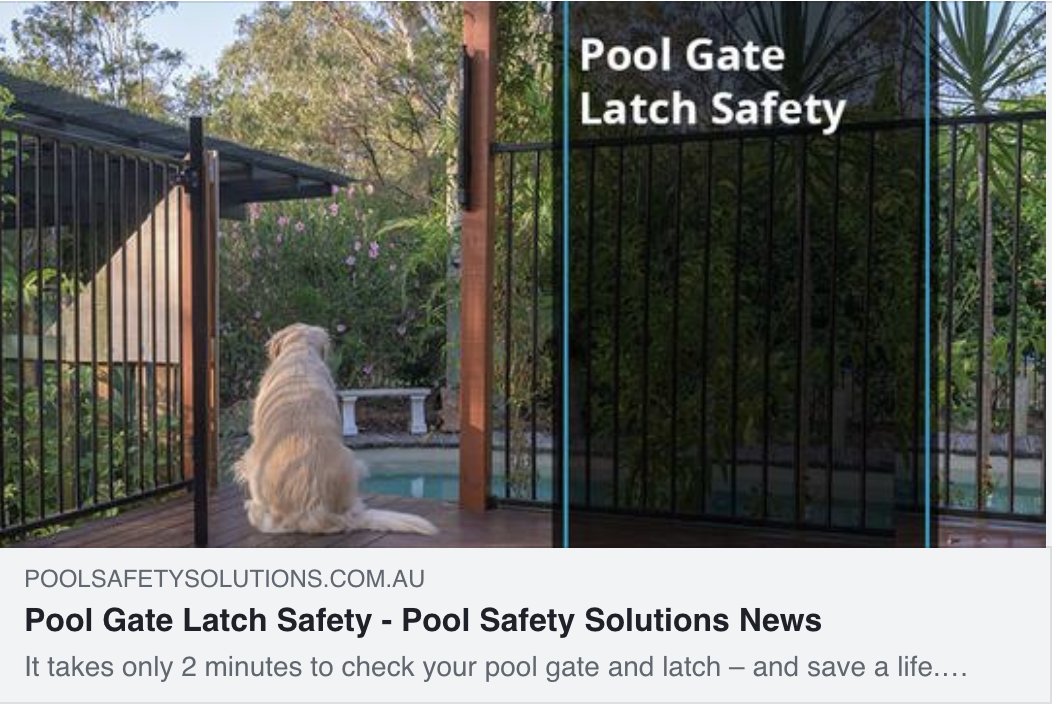 Want some great checklists to test your gate before your inspector arrives? Our blog Pool Gate Latch Safety is perfect for you – where it only takes 2 minutes to check your pool gate and latch, and save a life.
The height of your pool and spa barriers
The pool fence should be at least 1200mm high, and the boundary fence should be at least 1800mm high to comply with safety standards. So from finished ground level on the outside, the pool fence height is at least 1200mm high, or from the top of the boundary fence to finished ground level is at least 1800mm high on the inside or pool side.
Hint: your finished ground level is where you stand at the base of the barrier.
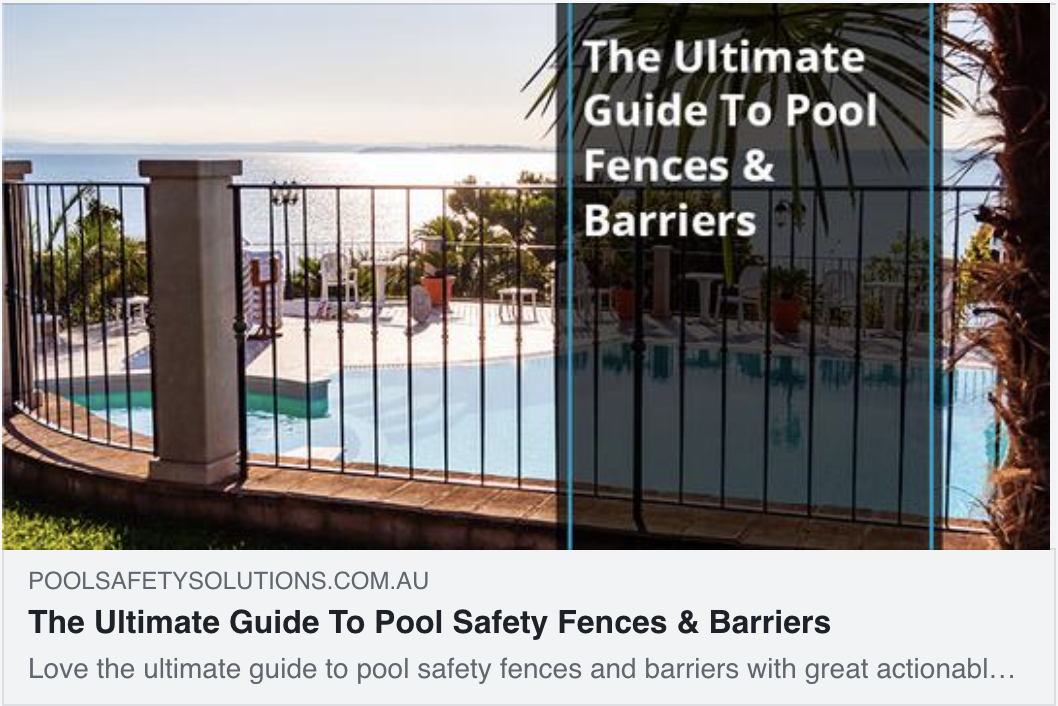
Our blog The Ultimate Guide To Pool Fences & Barriers has all the details, tips and solutions to get your pool fences and barrier compliant prior to your inspection.
The strength and rigidity of the pool and spa barriers
Pool and spa barriers must be strong, secure and safe to prevent children from easily accessing the pool and pool inspectors must conduct strength and rigidity testing on the pool barrier to make sure they are strong and secure.
Your pool safety inspector will use forces of up to 330Nm to approximately 33KG on posts and/or footings and up to 250Nm to approximately 25KG on sections between posts and/or footings.
Gaps in the pool barrier
Gaps in the pool barrier can make it easy for children to access the pool area.
Gaps in the pool barrier should be no larger than 100mm between any of the vertical elements or distance below the bottom or horizontal elements of the fence line.
Surrounds of the pool and spa area
Climbable objects near the pool fence also allows children access to the pool area. Objects such as trees, plant pots, BBQs, toys, and clotheslines should be at least 900mm away from the pool fence, to prevent children from climbing over it.
The NCZ Non Climbable Zone successfully keeps children from accessing the pool area by forbidding any objects, trees or shrubbery to exist within 900mm of the pool, fences and barriers.
If climbable objects – such as trees, plant pots, BBQs, toys and clothes lines – are around the pool or too close to the pool fence, they serve as a potential climbing aid into the pool area.
Objects such as toys and plant pots can be removed, but a bush, shrub or tree may be really difficult.
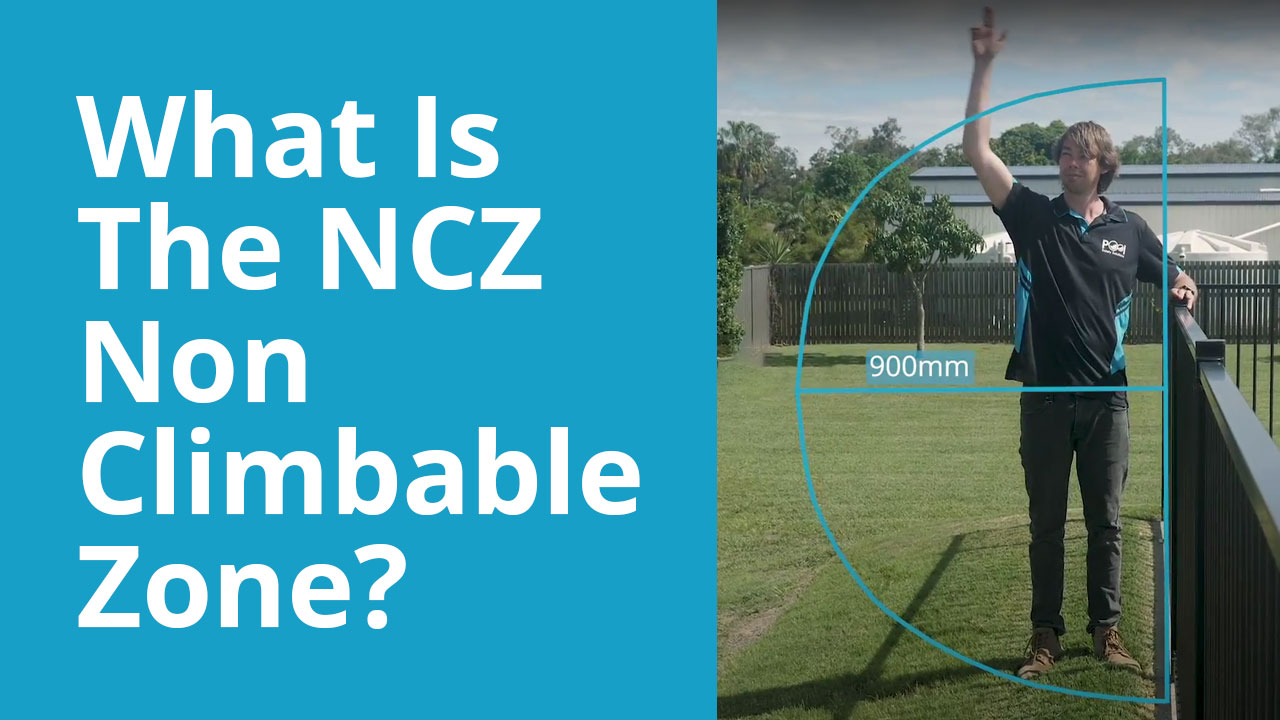
Our blog What Is The NCZ Non Climbable Zone breaks down all the details of the NCZ with all the solutions and tips to get you compliant for your inspection.
The CPR Sign is missing, incorrectly located or out of date
Safety signs are a critical part of pool safety and can be considered as a layer of protection. The sign should be clear and visible, indicating the pool rules, safety guidelines, and emergency contact information. It should also be located in an easily visible and accessible location.
The CPR Cardiopulmonary Resuscitation sign sign must be
- attached to the pool safety fence or displayed near the pool, so the sign is clearly visible
- in good condition and able to be read easily from 3 metres
- made of durable and weatherproof material
- prominently include information matching Australian Resuscitation Council’s recommended technique for CPR and explaining how to act in an emergency, from calling Triple 000 to providing first aid.
It’s very easy for property owners to feel overwhelmed by the complex pool laws and regulations governing the exact distances and heights of gate latches, climbable objects, fences and barriers.
The NSW Swimming Pool Register created Pool Inspection Self-Assessment Checklists to help property owners check the safety of their pool, spa, fences and barriers, navigating through 3 standards. The QBCC Queensland Building and Construction Commission’s Pool Compliance Checklist covers all things Queensland and pool safety – with 1 standard and the VBA’s Pool and spa safety barrier self assessment checklists based upon 5 standards.
Checklists are used for legislation and compliance in accordance to a number of factors
- the type of pool, spa or barrier
- what kind of property your pool is on
- when your pool, spa fence was built and installed, and
- if any upgrades were made over time
Here at PoolSS, we’re taking it a step further to reduce 10 checklists into 1 with the PoolSS DIY Inspection Checklist.
This lifesaving knowledge checks barriers and fences are compliant, makes sure equipment is stored safely and maintains effective standard pool safety.
New Pool Tip: Thinking about installing a new pool or spa? The Ultimate PoolSS Checklist is perfect for your pool preparation.
Happy Pool Safety Checklists
The PoolSS DIY Inspection Checklist
Pass your Pool Safety Inspection the First Time.
Forget Government pool compliance checklists. Get compliant with our easy-to-follow PoolSS DIY Inspection Checklist. We've simplified the legal requirements so you can confidently check your pool area is safe and compliant. Keep Pool Safety simple and stress-free.
Keep pool safety simple, stress-free and in your control.
Double tap the images and save directly to your phone.
Or hit Download Now to save to your files and use as a real-time fillable checklist.


Disclaimer: The PoolSS DIY Inspection Checklist is a guide only, and does not constitute acknowledgment or approval of compliance or safety. If you check "No" to any of our questions, we recommend you Book An Inspection with your Pool Safety Inspector.